Freight insights / 4 min read
RORO Vehicle Shipping: When It Makes Sense and When It Does Not
RoRo, or Roll-on/Roll-off, is one of the simplest ocean shipping ideas: a wheeled vehicle is driven onto a vessel by ramp and driven off at destination. The simplicity is real, but it does not mean RoRo fits every vehicle.
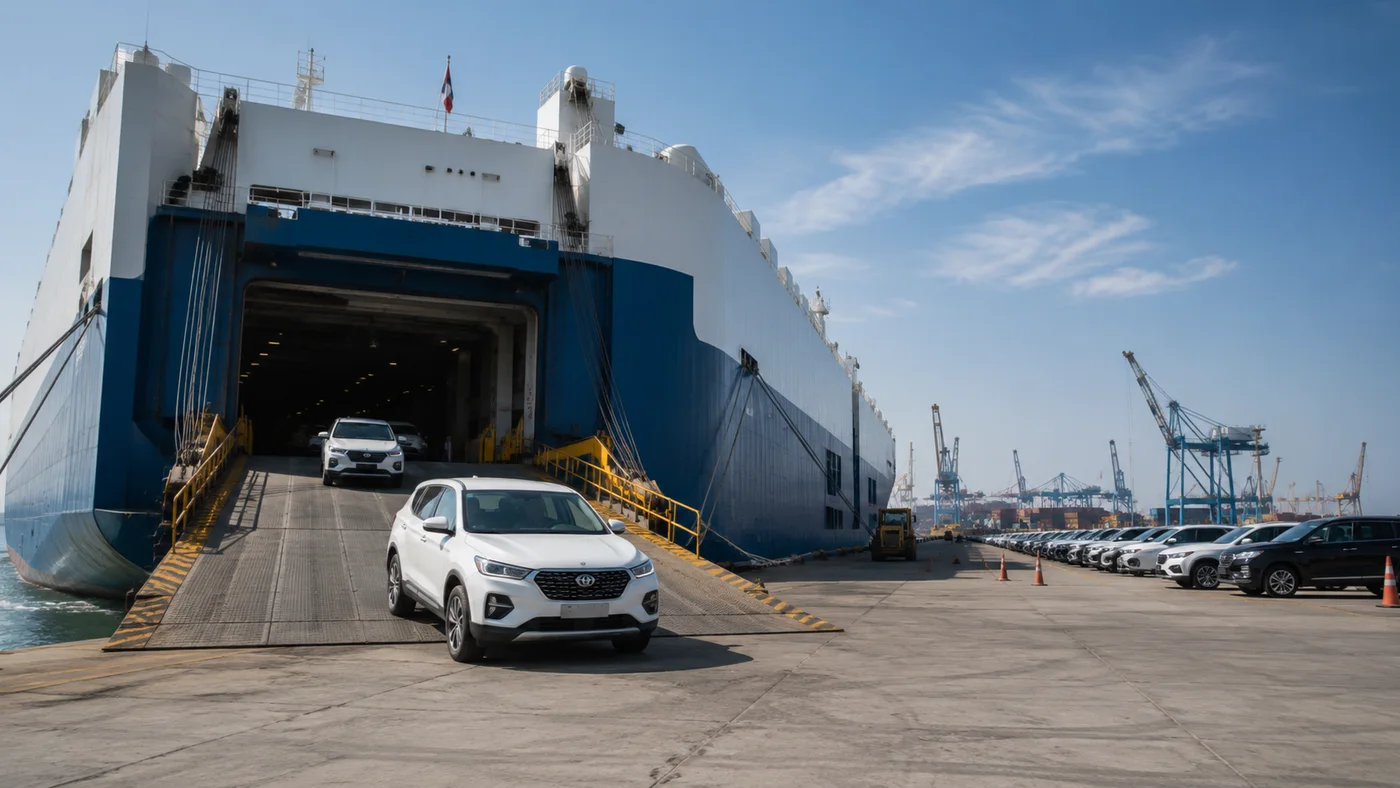
RoRo makes sense for running vehicles on supported routes
RoRo is usually strongest when the vehicle runs, steers, brakes, has keys, and can be safely loaded without special equipment. It is commonly used for cars, SUVs, pickups, vans, buses, trucks, trailers, and certain types of equipment.
It can be an efficient choice when the origin and destination ports support RoRo service and the vehicle does not need to travel with loose cargo, spare parts, or personal goods.
- Running passenger vehicles.
- Dealer or auction vehicles that can be released and driven.
- Trucks, vans, and equipment that fit vessel and port rules.
- Routes where RoRo sailing options are available.
RoRo may not fit high-value, non-running, or complex shipments
If the vehicle is non-running, missing keys, heavily damaged, very low clearance, high value, or shipping with parts and cargo, a container or specialized handling plan may be better.
RoRo vehicles are accessible during port and vessel handling, and they are not sealed inside a private container. That is one reason many customers consider marine insurance and compare RoRo against container shipping before booking.
- Classic, exotic, or collector vehicles that need enclosed protection.
- Vehicles shipping with spare parts, household goods, or commercial cargo.
- Non-running units that need winch, forklift, or special port approval.
- Destinations where container service is more practical than RoRo.
RoRo or container: a practical comparison
| Decision | RoRo | Container |
|---|---|---|
| Vehicle condition | Operator acceptance for the unit and safe ramp handling | Loading and securing plan for the specific condition |
| Additional cargo | Often restricted; obtain written acceptance | Possible with compatible cargo, inventory, and approval |
| Route | Requires suitable RoRo ports and sailings | Requires a suitable container service and loading facility |
| Cost comparison | Include inland, terminal, ocean, and destination legs | Also consider loading, unloading, drayage, and equipment time |
What to prepare before a RoRo quote
A good RoRo quote starts with the VIN, year, make, model, dimensions, running condition, pickup location, destination country, ownership documents, and target timing.
The quote also depends on inland transport to the port, port fees, ocean freight, destination handling, insurance, and document requirements. Fleet X Direct can coordinate those moving parts so the customer understands the full route, not just the ocean leg.
The simple rule
Use RoRo when the vehicle is operable, the route supports it, and the customer wants efficient port-to-port ocean movement. Use container or enclosed alternatives when protection, cargo combination, destination flexibility, or vehicle condition matters more than the simplest loading method.
Check the title and destination before choosing the vessel
The transport method does not solve a purchase-document problem. Before paying for a vehicle intended for export, confirm the seller can supply the required ownership documents and that the destination accepts the vehicle and its title status. A salvage designation, modification, age, or damage history may require additional review.
For a used vehicle leaving the United States, confirm current CBP export instructions, advance document submission, and applicable electronic export filing with the port and filing party. Build those deadlines into the plan. Do not book a pickup on the assumption that an auction invoice alone makes the unit export-ready.
Think in stages, not just sailing days
A complete schedule includes seller release, inland pickup, port receiving, export readiness, the sailing, destination discharge, release, and final collection. Vessel transit is only one part. Missing the receiving cutoff can matter more than a small difference in advertised sea transit.
Ask what happens if the vehicle misses its planned sailing and how terminal storage is charged. At destination, identify the consignee and clearance contact before departure. A vehicle that has arrived by sea may still be unavailable for collection while release steps remain incomplete.
Use an acceptance checklist for unusual vehicles
Provide modifications, exact dimensions when outside standard specifications, ground clearance, leaks, and any steering or braking limitation. For electric or alternative-fuel vehicles, disclose battery condition and damage and obtain the operator's current acceptance instructions. A non-running conventional vehicle and a battery-damaged vehicle are not the same handling case.
The vehicle should be prepared to the booked operator's rules for cleanliness, fuel or charge level, alarms, keys, and removable items. Requirements vary. Obtain the instructions for the actual booking instead of relying on a generic online preparation list.
Turn the details into a shipping plan.
Send your route, cargo, and timing to the Fleet X Direct team.
Discuss a shipment